


Casing integrity is a critical consideration in oil and gas well operations. Mechanical deformation, corrosion, wear, scale buildup, and localized casing damage can affect well performance, production efficiency, and long-term well integrity. For these applications, a multi-finger caliper (40 finger) can provide detailed dimensional information about the internal condition of casing.
For wireline engineers and technical procurement managers, selecting the right 40-arm or 40-finger caliper logging tool requires more than comparing the number of fingers. Tool diameter, measurement resolution, operating environment, data acquisition method, casing compatibility, and supplier support all influence the suitability of a caliper tool for a specific well.
What Is a 40-Finger Caliper Tool?
A 40-finger caliper tool is a multi-arm mechanical logging instrument designed to measure the internal diameter and geometric profile of casing.
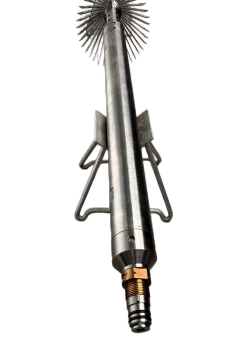
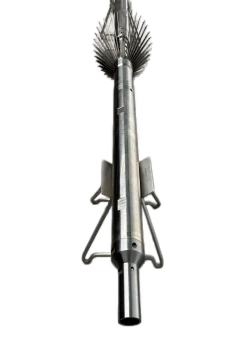
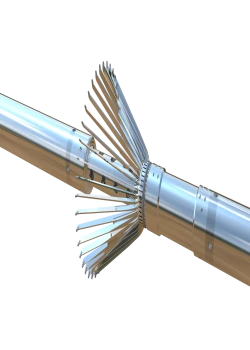
During logging, multiple spring-loaded fingers maintain contact with the casing wall. As the tool moves through the well, variations in casing diameter cause corresponding mechanical movements of the fingers. These movements are converted into measurement data that can be used to identify changes in casing geometry.
Compared with lower-arm-count calipers, a 40-finger configuration provides a high-density circumferential measurement pattern. This can be useful when engineers need more detailed information about localized deformation, corrosion-related diameter changes, or irregular casing profiles.
Typical applications include:
◆Casing integrity evaluation
◆Casing deformation and ovality detection
◆Corrosion and metal-loss investigation
◆Detection of localized casing damage
◆Post-workover casing inspection
◆Production and injection well diagnostics
◆Cased hole logging operations
◆Mechanical condition assessment before well intervention
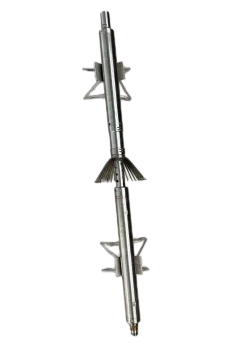
Our multi-finger caliper (40 finger)
A cased-hole logging solutions provider.
Check Casing Size and Tool OD Compatibility
The first specification to confirm is casing compatibility.
Before purchasing a 40-finger caliper tool, engineers should provide the supplier with the casing size, nominal internal diameter, expected minimum and maximum ID, and relevant completion information.
The tool's outside diameter and finger measurement range must be compatible with the target casing. If the tool cannot pass through restrictions or the fingers cannot maintain reliable contact with the casing wall, measurement quality can be compromised.
For procurement teams, it is useful to request a compatibility table showing:
◆Tool outside diameter
◆Minimum and maximum measurable casing ID
◆Recommended casing sizes
◆Finger travel range
◆Maximum logging speed
◆Temperature and pressure ratings
This information helps determine whether a particular multi-finger caliper (40 finger)is suitable for the planned well before an order is placed.
Evaluate Measurement Resolution and Accuracy
A major reason for selecting a 40-finger configuration is the need for detailed casing geometry information.
However, a higher number of measurement fingers does not automatically guarantee better logging results. Engineers should also evaluate the tool's measurement resolution, accuracy, repeatability, mechanical response, and calibration method.
When requesting technical specifications, consider asking:
1.What is the diameter measurement accuracy?
2.What is the minimum detectable dimensional change?
3.What is the finger displacement resolution?
4.How is the tool calibrated?
5.What is the repeatability under downhole conditions?
6.How is measurement data converted into a casing profile?
For casing integrity applications, these parameters can be more meaningful than simply comparing the number of caliper arms between suppliers.
Consider the Downhole Operating Environment
Cased-hole logging tools operate under demanding downhole conditions. Temperature, pressure, well deviation, fluid properties, and logging speed can all affect tool performance.
A procurement specification should therefore include the expected:
Temperature range + Pressure rating + Logging speed + Well deviation + Fluid environment
For high-temperature or high-pressure applications, confirm that the electronics, mechanical components, seals, connectors, and pressure housing are designed for the required conditions.
Engineers should also consider whether the caliper will be run in wells containing scale, debris, heavy fluids, or other conditions that could influence finger movement.
Determine the Appropriate Data Acquisition Mode
Another important consideration is whether the tool is designed for real-time wireline logging or memory-mode logging.
Memory logging tools record downhole measurements internally and allow the data to be retrieved after the tool returns to surface. This operating mode can be useful in applications where conventional real-time wireline deployment is difficult or where a compact logging configuration is preferred.
For a multi-finger caliper (40 finger), procurement teams should verify:
◆Memory capacity
◆Sampling rate
◆Data storage format
◆Battery operating time
◆Data download method
◆Surface readout or interpretation software
◆Data export compatibility
The appropriate configuration depends on the logging objective and the operational method used by the service company.
Assess Mechanical Reliability
A 40-finger caliper contains many moving mechanical components. Finger design, spring characteristics, wear resistance, centralization, and mechanical protection can directly influence logging reliability.
Engineers should pay particular attention to how the fingers respond to:
◆Casing restrictions
◆Sudden ID changes
◆Scale or deposits
◆Localized deformation
◆High-angle or deviated well sections
Ask the supplier about finger material, replaceable components, mechanical protection, maintenance intervals, and field serviceability.
A well-designed tool should provide stable casing contact without creating unnecessary mechanical drag or compromising tool conveyance.
Compare Suppliers Beyond the Purchase Price
When sourcing a 40-finger caliper tool supplier, price should be evaluated together with technical compatibility, manufacturing capability, customization options, documentation, and after-sales support.
A practical RFQ should request:
1.Complete technical datasheet
2.Tool dimensions and casing compatibility
3.Measurement range and accuracy
4.Temperature and pressure ratings
5.Logging speed specifications
6.Memory or real-time configuration details
7.Calibration information
8.Recommended spare parts
9.Delivery time
10.Warranty and technical support
For international oilfield procurement, suppliers should also be able to provide clear product documentation and communication support throughout tool selection, commissioning, and operation.
Conclusion on 40-Finger Caliper Tool
Selecting a multi-finger caliper (40 finger) for casing integrity evaluation requires a comprehensive assessment of both technical specifications and field requirements. Casing compatibility, measurement accuracy, operating conditions, data acquisition mode, mechanical reliability, and supplier support should all be considered before purchasing.
For wireline engineers, the key question is not simply how many fingers a caliper has, but whether the complete tool configuration can deliver reliable casing geometry measurements under the intended downhole conditions.
For technical procurement managers, a detailed RFQ that defines casing dimensions, operating environment, measurement requirements, and data acquisition needs can make supplier comparison more efficient and reduce compatibility risks.
If you are sourcing a multi-finger caliper (40 finger) for casing integrity evaluation, provide your casing specifications and operating requirements to info@a-oneoil.com. A-One Oil can help confirm tool compatibility and recommend a suitable configuration for your cased-hole logging application.


