


In cased-hole logging operations, maintaining the correct position of a logging tool inside the casing is essential for obtaining reliable measurement data. Tool eccentricity, excessive movement, and inconsistent contact with the casing can affect measurement quality and may reduce the effectiveness of certain logging applications.
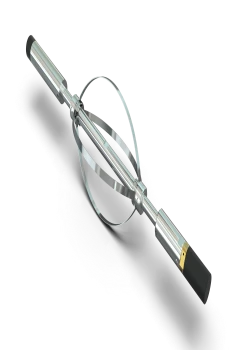
The Leaf Spring Centralizer Tools are mechanical component designed to help keep a downhole logging tool positioned approximately along the casing axis while allowing the tool string to move through the well.
For wireline service companies, logging engineers, and technical procurement managers, understanding how a leaf spring centralizer works can help when selecting the appropriate centralization solution for cased-hole logging tools.
What are The Leaf Spring Centralizer Tools?
A leaf spring centralizer Tool is a mechanical centralizing device typically installed as part of a logging tool string.
It generally consists of a central body and multiple flexible spring leaves or bows arranged around the tool. When the tool enters the casing, the spring leaves contact the casing wall and generate an outward restoring force.
As the tool moves through the casing, the spring elements flex according to the casing diameter and local well conditions. This allows the centralizer to maintain contact with the casing while accommodating changes in internal diameter.
The actual design, spring stiffness, number of leaves, dimensions, and operating range depend on the specific application.
How Does a Leaf Spring Centralizer Maintain Tool Position?
The centralizing effect is mainly produced by the elastic characteristics of the spring leaves.
When the tool is smaller than the casing ID, the leaves extend outward until they contact the casing wall. If the logging tool moves away from the casing centerline, the spring elements on the offset side and opposite side respond differently.
This produces a restoring force that helps move the tool back toward a more centered position.
The centralizer therefore does not necessarily force the tool to remain perfectly concentric under all conditions. Instead, it provides a controlled mechanical force that helps reduce tool eccentricity.
This distinction is important when evaluating centralizer performance.
A properly selected centralizer should provide sufficient restoring force while still allowing the tool to travel through the casing without excessive friction or drag.
Our Leaf Spring Centralizer Tools


Why Is Tool Centralization Important in Cased-Hole Logging?
Different logging measurements have different sensitivities to tool position.
For example, some measurements depend on the distance between sensors and the casing wall. If the tool becomes excessively eccentric, the measurement response may become asymmetric or more difficult to interpret.
Centralization can help improve:
◆Tool position stability
◆Measurement consistency
◆Sensor-to-casing geometry
◆Logging repeatability
◆Mechanical protection of the tool
◆Data interpretation
For certain cased-hole logging applications, maintaining an appropriate sensor position relative to the casing is particularly important.
However, the required degree of centralization depends on the specific logging technology. A centralizer should therefore be selected based on the measurement principle and tool design rather than simply added as a standard component.
What Happens If the Logging Tool Is Poorly Centralized?
Poor centralization can occur when the centralizer is incorrectly sized, damaged, too stiff, too flexible, or unsuitable for the casing environment.
Potential problems include:
1, Excessive Tool Eccentricity-The logging tool may remain significantly offset from the casing centerline, changing the geometry between the sensor and casing.
2, Unstable Measurements-If tool position changes continuously during logging, measurement responses may become less consistent.
3, Increased Mechanical Contact-Excessive or improperly designed spring force can increase friction between the tool string and casing.
4, Difficult Tool Movement-A centralizer with excessive radial force may increase drag, particularly in deviated or highly deviated wells.
5, Reduced Operational Efficiency-Poorly selected centralization components can increase the risk of difficult deployment, retrieval, or unexpected tool-string behavior.
For this reason, centralizer selection should balance centralizing force, friction, tool diameter, casing size, and downhole operating conditions.
How Does Casing Size Affect Centralizer Selection?
Casing ID is one of the most important parameters when selecting a Leaf Spring Centralizer.
The centralizer needs to operate within a defined casing diameter range. If the casing is too large relative to the centralizer's design range, the spring leaves may not provide sufficient contact force.
If the casing is too small, the leaves may be excessively compressed, increasing contact force and potentially making tool movement more difficult.
Procurement teams should therefore confirm:
◆Minimum casing ID
◆Maximum casing ID
◆Tool OD
◆Centralizer OD
◆Recommended operating range
◆Maximum compressed diameter
◆Maximum expanded diameter
These parameters should be checked against the actual casing program before ordering.
What Parameters Should Engineers Consider in Deviated Wells?
Well deviation can significantly affect tool-string behavior.
In a vertical well, gravity primarily acts along the tool axis. In deviated or horizontal sections, gravity can cause the tool to contact the low side of the casing.
A properly designed centralizer can help maintain a more controlled tool position, but it cannot eliminate all effects of gravity and well geometry.
For deviated cased-hole logging, engineers should consider:
◆Well inclination
◆Casing ID
◆Tool OD
◆Centralizer spring force
◆Friction coefficient
◆Logging speed
◆Tool-string configuration
◆Expected dogleg severity
◆Well fluid conditions
These factors should be evaluated together rather than considering centralizer dimensions alone.
Leaf Spring Centralizer vs. Other Centralization Designs
Leaf spring centralizers are one of several approaches used for downhole tool centralization.
Compared with rigid centralizers, a spring-based design can accommodate variations in casing diameter while maintaining mechanical contact.
Compared with some roller-based designs, leaf spring centralizers generally provide a simpler contact mechanism without relying on rotating components.
The appropriate choice depends on the logging tool, casing geometry, well deviation, required centralization force, and operational conditions.
For procurement purposes, it is more useful to compare centralizers according to technical operating parameters than simply comparing product names.
What Should Technical Procurement Managers Specify?
When sourcing a Leaf Spring Centralizer for wireline or cased-hole logging applications, an RFQ should include sufficient information for the supplier to select the correct configuration.
Important specifications may include:
◆Applicable logging tool OD
◆Casing ID range
◆Centralizer maximum OD
◆Minimum operating diameter
◆Number of spring leaves
◆Spring material
◆Spring stiffness or centralizing force
◆Connection type
◆Overall length
◆Maximum temperature rating
◆Maximum pressure rating
◆Material compatibility
◆Expected logging speed
◆Well deviation
◆Memory or real-time logging application
◆Required quantity and spare parts
It is also useful to provide a drawing of the existing tool string if the centralizer needs to be integrated with a specific logging assembly.
Conclusion
A-One Oil Leaf Spring Centralizer Tools help maintain logging tool position by using flexible spring elements to generate a controlled restoring force between the tool and casing wall.
Its primary purpose is to reduce excessive tool eccentricity while allowing the logging assembly to move through the casing. Proper centralization can contribute to more consistent sensor positioning and more reliable cased-hole logging measurements.
However, centralizer performance depends on correct sizing and application. Casing ID, tool OD, well deviation, spring force, friction, temperature, pressure, and logging speed should all be considered during tool selection.
For technical procurement managers, the most important step is to provide complete casing and tool-string information when requesting a quotation. For field engineers, the key is to ensure that the centralizer provides sufficient positional stability without creating excessive drag or restricting tool movement.
If you are sourcing a Leaf Spring Centralizer for wireline, cased-hole logging, or downhole inspection tools, provide your tool OD, casing ID range, well conditions, and connection requirements to info@a-oneoil.com. A-One Oil can help confirm compatibility and recommend a suitable centralizer configuration for your application.


