


Memory logging has become an important method for acquiring downhole data in cased hole logging and other oilfield applications where conventional real-time wireline operations may not be practical. Unlike real-time systems that continuously transmit measurements to the surface, memory logging tools record data downhole for later retrieval and processing.
In this operating environment, accurate depth and time information are essential for interpreting the recorded measurements. A Depth Time Recorder (DTR) can support memory logging operations by providing reliable depth-time reference data that helps engineers correlate downhole measurements with the actual position of the logging tool.
For wireline engineers and technical procurement managers, understanding how a Depth Time Recorder works and what specifications matter can help improve logging-data quality and simplify tool selection.
What Is a Depth Time Recorder?
A Depth Time Recorder is an instrument or recording system designed to acquire and store depth and time information during well logging operations.
Depth information indicates where the logging tool is positioned in the well, while time information provides a chronological reference for the recorded measurements. When these two parameters are associated with downhole logging data, engineers can establish a relationship between measurement events and their corresponding depth.
In memory logging applications, this function is particularly important because the logging data may not be transmitted continuously to the surface during acquisition.
Depending on the system configuration, a Depth Time Recorder may record parameters such as:
◆ Tool depth
◆ Time or timestamp
◆ Logging speed
◆ Depth-time correlation information
◆ Surface or downhole operational events
The exact configuration depends on the logging system, application requirements, and data acquisition architecture.
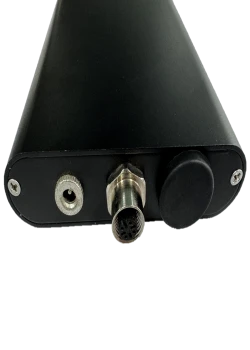
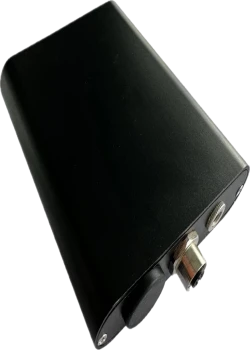
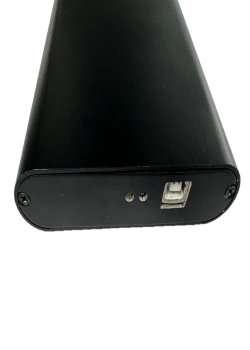
Our Depth Time Recorder
Why Is Depth-Time Correlation Important in Memory Logging?
One of the main challenges of memory logging is establishing an accurate relationship between recorded measurements and well depth.
A memory logging tool can store large amounts of downhole data, but the data must eventually be correlated with depth for engineering interpretation. If depth information is inaccurate or inconsistent, it can become difficult to determine the exact location of casing defects, cement evaluation anomalies, restrictions, or other downhole conditions.
A Depth Time Recorder can provide an independent or complementary reference for this correlation.
For example, during a cased hole inspection operation, engineers may need to determine the precise depth of a casing anomaly identified by a multi-finger caliper or electromagnetic inspection tool. Accurate depth-time information can help align the recorded measurement with the well's depth reference.
This is particularly useful when multiple datasets need to be compared.
How Does a Depth Time Recorder Work?
The basic operating principle is to acquire depth and time information continuously or at defined sampling intervals and store the information for subsequent analysis.
During a logging run, the recording system associates depth measurements with corresponding timestamps. Depending on the tool configuration, depth may be obtained through a mechanical, electronic, encoder-based, or other measurement mechanism.
The recorded information can then be transferred to the surface after the logging operation.
A simplified workflow is:
Depth Measurement → Time Stamping → Data Storage → Data Retrieval → Depth-Time Correlation → Logging Data Interpretation
The accuracy of each stage can influence the quality of the final logging result. Therefore, engineers should evaluate the complete measurement and data-management system rather than considering the recorder as an isolated component.
Depth Time Recorder Applications in Cased Hole Logging
A Depth Time Recorder can support various cased hole logging applications where accurate depth correlation is required.
Potential applications include:
1.Casing Inspection-When investigating casing deformation, corrosion, wear, or other integrity-related conditions, engineers need to identify the depth of detected anomalies accurately.
2.Cement Evaluation-Cement bond and related evaluation measurements often require precise depth correlation to compare logging responses with casing and completion information.
3.Memory Multi-Arm Caliper Logging-Multi-arm caliper tools generate detailed measurements of casing geometry. Combining the recorded caliper data with accurate depth-time information can assist engineers in identifying the depth and extent of casing deformation or internal restrictions.
4.Electromagnetic Casing Inspection-Electromagnetic inspection tools can identify indications associated with casing conditions. Reliable depth correlation is important when reviewing and comparing inspection results.
5.Post-Job Data Analysis-Because memory tools store data for later processing, depth-time information can provide an important reference during post-job interpretation and reporting.
Key Specifications to Check Before Purchasing
When sourcing a Depth Time Recorder for well logging, procurement teams should evaluate more than basic recording capability.
1. Depth Measurement Range
Confirm that the recorder can accommodate the expected logging depth and operational configuration.
2. Depth Accuracy and Resolution
Accuracy determines how precisely the recorded information represents the actual tool position. Resolution determines the smallest depth increment that can be represented in the recorded data.
These specifications should be evaluated according to the requirements of the logging application.
3. Sampling Rate
The appropriate sampling rate depends on logging speed and the type of data being correlated. Higher sampling rates can provide more detailed depth-time information, but they may also increase data-storage requirements.
4. Memory Capacity
For memory logging operations, sufficient storage capacity is essential. Procurement teams should consider expected logging duration, sampling rate, data format, and the number of parameters being recorded.
5. Battery Operating Time
If the recorder is used in a memory-mode logging system, battery endurance should be sufficient for the complete logging operation, including operational margins.
6. Data Download and Compatibility
Engineers should confirm how recorded data are retrieved and processed. Compatible data formats, communication interfaces, and surface readout systems can simplify post-job data management.
7. Environmental Ratings
Temperature and pressure ratings should match the planned downhole environment. Mechanical construction, electronics, seals, connectors, and pressure housings should all be considered when evaluating suitability.
What Should Engineers Include in an RFQ?
A detailed RFQ can help suppliers recommend the appropriate Depth Time Recorder configuration.
Procurement teams should provide:
◆ Maximum logging depth
◆ Expected logging speed
◆ Required depth accuracy
◆ Sampling requirements
◆ Temperature and pressure conditions
◆ Memory capacity requirements
◆ Battery requirements
◆ Data interface requirements
◆ Existing logging-tool configuration
◆ Required surface readout or software compatibility
Providing this information at the beginning of the purchasing process reduces uncertainty and makes technical comparison between suppliers more efficient.
Conclusion of Depth Time Recorder
A Depth Time Recorder can play an important role in memory logging operations by providing depth and time information for accurate data correlation. This capability becomes particularly valuable when downhole measurements are stored in memory and interpreted after the logging run.
For wireline engineers, the key considerations include depth accuracy, resolution, sampling rate, environmental performance, data storage, and compatibility with the existing logging system. For technical procurement managers, these specifications should be incorporated into the RFQ so that suppliers can recommend a configuration that matches the intended application.
When properly integrated into a memory logging workflow, reliable depth-time information can support more consistent data interpretation, improve anomaly depth identification, and facilitate the comparison of multiple cased hole logging datasets.
If you are sourcing a Depth Time Recorder for memory logging or cased hole logging applications, provide your logging-tool configuration and operating requirements to info@a-oneoil.com. A-One Oil can help confirm compatibility and recommend a suitable Depth Time Recorder configuration for your application.


