


In wireline and cased-hole logging operations, accurate depth and time information is essential for reliable logging data acquisition, depth correlation, and post-job interpretation. A Depth Time Recorder (DTR) is commonly used to record depth-related information and corresponding time data during logging operations, helping engineers maintain a consistent operational record.
However, integrating a new Depth Time Recorder into an existing wireline logging system is not always a straightforward process. Differences in signal interfaces, encoder configurations, communication protocols, power supply requirements, and software compatibility can affect system integration and measurement reliability.
For wireline service companies and oilfield equipment procurement teams, verifying equipment compatibility before purchasing or installation can help avoid unnecessary modifications, commissioning delays, and operational problems.
This article outlines the key technical factors to evaluate when selecting a Depth Time Recorder for integration with existing logging equipment.
Understand the Existing Logging System Configuration
Before selecting a Depth Time Recorder, the first step is to understand the configuration of the existing logging system.
A typical wireline logging setup may include a logging unit, depth encoder, cable measuring system, acquisition computer, surface control panel, and downhole logging tools. The Depth Time Recorder must be able to work with the relevant components of this configuration.
Important information to collect includes:
◆ Existing logging unit manufacturer and model.
◆ Depth encoder type and output configuration.
◆ Available signal interfaces and connection types.
◆ Data acquisition system and software version.
◆ Power supply specifications.
◆ Required depth and time recording functions.
It is also important to clarify whether the DTR will replace an existing recorder or operate as an additional recording device within the logging system.
Understanding the existing configuration provides a technical basis for evaluating compatibility and identifying any additional interface requirements.
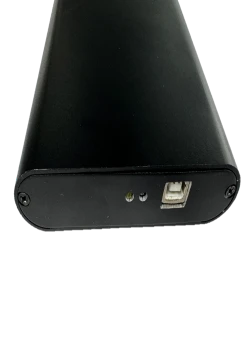
Our Depth Time Recorder


Verify Depth Encoder Compatibility
The depth encoder is one of the most important components to consider when integrating a Depth Time Recorder.
During wireline logging operations, cable movement is measured by a depth encoder or measuring wheel system. The encoder generates signals corresponding to cable movement, allowing the surface system to calculate the logging depth.
Different logging systems may use different encoder technologies and signal configurations.
Before integration, verify the following:
1, Encoder Type-Confirm whether the existing system uses an incremental rotary encoder, optical encoder, or another depth-measurement configuration.
2, Output Signal Type-Check the encoder output, such as quadrature A/B signals, pulse signals, or other supported formats. The DTR input must be compatible with the actual encoder output.
3, Pulse Resolution-Determine the encoder resolution, typically expressed as pulses per revolution or pulses per unit of cable movement. This parameter directly affects depth calculation and measurement scaling.
4, Direction Detection-For logging operations involving both upward and downward cable movement, verify whether the system can recognize cable movement direction correctly.
Incorrect encoder configuration may result in depth measurement errors, incorrect movement direction, or inconsistent depth records.
Check Signal Interfaces and Communication Protocols
Signal interface compatibility is another critical factor when integrating a Depth Time Recorder with existing logging equipment.
Different manufacturers may use different electrical interfaces and communication methods. A recorder designed for one system may not connect directly to another without an appropriate interface or signal conversion solution.
Key parameters to verify include:
◆ Signal input and output types.
◆ Voltage levels and electrical characteristics.
◆ Connector types and pin assignments.
◆ Supported communication interfaces.
◆ Data transmission format and update frequency.
For example, some systems may use direct encoder pulse inputs, while others may require communication through an acquisition computer or dedicated interface module.
Do not assume that two devices are compatible simply because they use the same connector type. Their electrical characteristics, signal assignments, and communication requirements must also match.
When necessary, request the interface diagram and connection specifications from both equipment manufacturers before proceeding with installation.
Confirm Time Recording and Data Synchronization
A Depth Time Recorder must provide reliable time information alongside depth-related records.
In logging operations, depth and time data are often used together to correlate cable movement, logging intervals, operational events, and acquired downhole measurements.
When evaluating DTR compatibility, consider the following:
1, Time Reference-Confirm whether the recorder uses its internal clock, the logging computer's system time, or an external time reference.
2, Time Accuracy-Review the clock accuracy and time resolution to determine whether they meet the operational requirements.
3, Data Synchronization-Verify how depth and time information are synchronized with the existing logging acquisition system.
4, Data Recording Format-Check whether recorded information can be exported in a format compatible with the existing data processing and reporting workflow.
Reliable synchronization helps reduce discrepancies between depth records and other logging data, supporting more consistent post-job analysis.
Evaluate Power Supply and Electrical Requirements
Electrical compatibility should be confirmed before connecting a new recorder to the existing logging system.
Important specifications include:
◆ Input voltage and acceptable voltage range.
◆ AC or DC power requirements.
◆ Power consumption.
◆ Polarity and grounding requirements.
◆ Electrical protection and isolation, where applicable.
If the existing logging unit provides power to external equipment, confirm whether its output meets the DTR manufacturer's requirements.
For systems using separate power supplies, verify that the recorder can operate reliably within the available electrical configuration.
Proper grounding and electrical protection are also important considerations in field environments where multiple electronic devices operate together
Review Software Compatibility and Data Management
Hardware compatibility alone does not guarantee successful system integration. Software and data management requirements must also be evaluated.
Before purchasing a Depth Time Recorder, confirm:
◆ Whether the recorder operates independently or requires dedicated software.
◆ Supported operating systems and software versions.
◆ Available data export formats.
◆ Compatibility with existing logging acquisition and processing workflows.
◆ Data storage capacity and retrieval methods.
◆ Availability of technical documentation and software support.
For wireline service companies operating different generations of logging equipment, software compatibility can be particularly important.
A suitable DTR should support a practical data management workflow without creating unnecessary changes to established field procedures.
Conduct Interface Testing Before Field Deployment
After confirming the main technical specifications, a controlled integration test is recommended before using the recorder in actual well logging operations.
A practical verification procedure may include:
1, Inspect connectors, cables, pin assignments, and electrical specifications.
2, Connect the DTR to the existing encoder or designated signal source.
3, Verify depth pulse acquisition and direction recognition.
4, Compare the recorded depth against a known reference or calibrated measurement.
5, Check time recording and synchronization.
6, Confirm data storage, export, and retrieval functions.
7, Evaluate system stability during continuous operation.
Any discrepancies should be investigated and resolved before field deployment.
This verification process helps identify interface problems early and reduces the risk of equipment incompatibility during critical logging operations.
What Should Procurement Teams Ask the DTR Manufacturer?
When requesting a quotation, technical procurement managers should provide the manufacturer with sufficient information to evaluate the proposed integration.
Recommended questions include:
◆ Which encoder types and signal formats does the Depth Time Recorder support?
◆ What are the supported input voltage levels and electrical interfaces?
◆ Can the recorder integrate with our existing logging unit?
◆ What communication protocols and connectors are available?
◆ How are depth and time data recorded and synchronized?
◆ What software, operating systems, and data export formats are supported?
◆ Can customized interfaces or connection cables be provided?
◆ Are technical drawings, wiring diagrams, and operating manuals available?
Providing the existing equipment model, encoder specifications, interface diagrams, and photographs of relevant connectors can help the manufacturer assess compatibility more accurately.
Conclusion
Integrating a Depth Time Recorder into an existing wireline logging system requires more than checking connector dimensions or basic electrical specifications. Encoder compatibility, signal interfaces, depth measurement configuration, time synchronization, power requirements, and software support all need to be evaluated.
A systematic compatibility assessment helps wireline service companies reduce integration risks, improve operational reliability, and avoid unnecessary equipment modifications.
A-One Oil is a professional manufacturer specializing in cased-hole logging tools and equipment. We provide technical support to help customers evaluate logging equipment requirements and identify suitable equipment configurations for their projects.
Looking for a Depth Time Recorder for your cased hole perforating application? Contact our technical team info@a-oneoil.com to discuss your system configuration, electrical requirements, compatibility, and customization needs.


