


In cased-hole logging, evaluating cement bond quality is essential for well integrity assessment, zonal isolation verification, and production or abandonment planning. Two commonly used measurements in cement bond logging are the Cement Bond Log (CBL) and the Variable Density Log (VDL).
Although CBL and VDL are often acquired together using a cement bond logging tool, they provide different views of the acoustic response in the cased wellbore. Understanding their differences helps field engineers interpret logging data more effectively and enables technical procurement teams to select suitable cement evaluation equipment for their operational requirements.
What Is a Cement Bond Log (CBL)?
A Cement Bond Log (CBL) is an acoustic measurement used to evaluate the coupling between the casing and the surrounding cement.
A conventional CBL tool typically includes an acoustic transmitter and receiver assembly. The transmitter generates an acoustic pulse, and the receiver records the returning signal after it travels through the wellbore environment.
In a conventional amplitude-based CBL measurement, the amplitude of the casing arrival is an important indicator of acoustic energy attenuation.
When the casing is poorly bonded to the surrounding cement, casing-related acoustic energy may remain relatively strong. When effective acoustic coupling exists between the casing and cement, more energy may be attenuated, resulting in a lower casing-wave amplitude.
However, CBL amplitude is not a direct measurement of cement compressive strength or a complete measurement of hydraulic isolation. Interpretation must account for casing dimensions, cement properties, tool centralization, fluid conditions, and other acquisition factors.
Typical CBL applications include:
◆ Evaluating acoustic coupling between casing and cement.
◆ Identifying intervals that may indicate poor cement bonding.
◆ Supporting cement job evaluation and remedial cementing decisions.
◆ Contributing to well integrity and zonal isolation assessments.
What Is a Variable Density Log (VDL)?
A Variable Density Log (VDL) is a waveform display used in acoustic cement bond logging. Rather than presenting only a single amplitude measurement, VDL displays the received acoustic waveform as a variable-density image across the logged depth interval.
The display uses variations in density or contrast to represent changes in the recorded acoustic signal. This allows engineers to observe waveform characteristics, including casing arrivals and formation-related arrivals, along the well.
In cement evaluation, VDL is particularly useful for examining the relative behavior of casing waves and formation waves. Changes in these waveform patterns can provide additional information for interpreting casing-to-cement and cement-to-formation acoustic coupling.
For example, strong casing arrivals may be associated with poor acoustic coupling, while recognizable formation arrivals may support an interpretation of effective acoustic energy transmission into the surrounding formation. Actual interpretation depends on the full waveform response and the prevailing well conditions.
Typical VDL applications include:
◆ Visualizing acoustic waveform characteristics along the wellbore.
◆ Supporting the interpretation of cement bond conditions.
◆ Examining casing and formation arrivals together with CBL amplitude.
◆ Identifying intervals that require additional engineering evaluation.
VDL should not be treated as a standalone, definitive measurement of cement quality. It is most useful when interpreted alongside CBL amplitude, acquisition quality indicators, and other relevant well information.
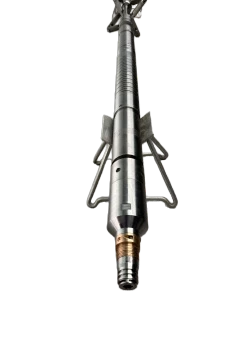
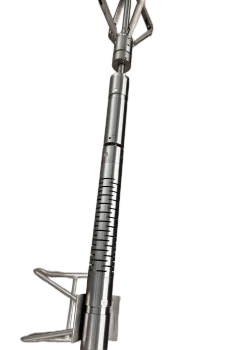
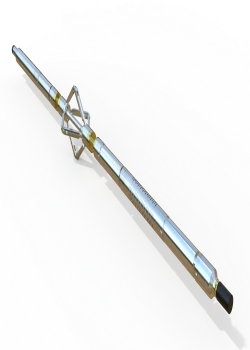
Our Variable Density Log (VDL)
A professional cased-hole logging solutions provider.
CBL vs VDL: Key Technical Differences
Although CBL and VDL are closely related, they differ in the way acoustic information is presented and interpreted.
|
Comparison item |
CBL |
VDL |
|
Primary output |
Casing-wave amplitude or amplitude-related measurement |
Variable-density waveform display |
|
Main information |
Relative attenuation of casing-related acoustic energy |
Waveform characteristics, including casing and formation arrivals |
|
Display format |
Typically a numerical curve or amplitude track |
Image-like waveform presentation |
|
Main interpretation focus |
Acoustic coupling between casing and cement |
Acoustic response patterns that support cement bond evaluation |
|
Engineering value |
Provides a quantitative amplitude indicator |
Provides additional waveform context |
|
Common use |
Initial assessment of cement bond response |
Complementary interpretation of acoustic behavior |
|
Main limitation |
Influenced by casing geometry, tool conditions, and other acoustic factors |
Requires waveform interpretation and adequate acquisition quality |
The key distinction is that CBL provides an amplitude-based measurement, while VDL provides a visual representation of acoustic waveforms.
They are complementary outputs rather than competing technologies. A combined CBL/VDL interpretation generally provides more useful information than relying on either output in isolation.
Why Are CBL and VDL Commonly Used Together?
A CBL curve may indicate changes in casing-wave amplitude, but amplitude alone may not fully explain the acoustic conditions in a particular interval.
VDL provides additional waveform context that helps engineers assess whether the observed response is consistent with casing-dominated arrivals, recognizable formation arrivals, or more complex acoustic behavior.
Using both outputs can help engineers:
1, Compare casing-wave amplitude with the corresponding waveform pattern.
2, Identify intervals where interpretation requires additional investigation.
3, Distinguish potential bonding issues from acquisition or environmental effects.
4, Improve documentation for cement evaluation and well integrity decisions.
Nevertheless, neither CBL nor VDL alone proves hydraulic isolation. Where the consequences of an incorrect cement evaluation are significant, engineers may need additional measurements, operational information, or independent evaluation methods.
How to Select a CBL/VDL Logging Tool
For oilfield logging companies and technical procurement managers, selecting a CBL/VDL logging tool requires more than comparing the product name or quoted price.
The tool configuration must match the intended well conditions, logging method, and existing surface or data-processing equipment.
Before purchasing, consider the following factors.
1. Tool dimensions and casing compatibility-Confirm the tool's outside diameter, applicable casing size range, centralization requirements, and mechanical connections. These parameters should be checked against the planned well configuration.
2. Temperature and pressure ratings-Verify the rated operating temperature and pressure for the complete tool assembly. Confirm whether the ratings apply to continuous operation, specified exposure periods, or particular configurations.
3. Logging mode-Determine whether the application requires a conventional wireline system, a memory-mode system, or another compatible configuration. Confirm the corresponding acquisition workflow, power requirements, and data retrieval method.
4. Measurement outputs-Check whether the proposed tool provides CBL amplitude, VDL waveform data, or additional cement evaluation measurements. Do not assume that every cement bond logging tool includes identical outputs.
5. Surface system and software compatibility-Confirm the required surface acquisition equipment, electrical interfaces, communication protocol, data formats, and interpretation software. Compatibility should be verified before the purchase order is finalized.
6. Calibration, testing, and after-sales support-Ask the manufacturer about factory testing, calibration procedures, operating documentation, spare parts, technical training, and troubleshooting support.
A detailed technical comparison helps procurement teams evaluate the complete solution rather than focusing exclusively on the initial equipment price.
RFQ Checklist for CBL/VDL Logging Equipment
When requesting a quotation from a cement bond logging tool manufacturer, provide as much relevant information as possible.
A practical request for quotation (RFQ) should include:
1, Required measurement outputs: CBL, VDL, or additional cement evaluation data.
2, Intended logging mode and existing system configuration.
3, Applicable casing sizes and required tool outside diameter.
4, Expected downhole temperature and pressure.
5, Required accessories, centralizers, cables, and surface equipment, as applicable.
6, Data acquisition, retrieval, and software requirements.
7, Spare parts, training, documentation, and after-sales service requirements.
8, Target delivery schedule and destination.
Providing these details enables the supplier to assess configuration compatibility and prepare a more accurate technical and commercial proposal.
Conclusion: Which Is More Important, CBL or VDL?
CBL and VDL serve complementary roles in acoustic cement bond logging. CBL provides an amplitude-based indication of casing-wave attenuation, while VDL presents waveform characteristics that support a more detailed interpretation of the acoustic response.
For field engineers, evaluating both outputs together helps build a more complete understanding of cement bond conditions. For procurement managers, selecting a suitable CBL/VDL tool requires careful consideration of measurement capabilities, well conditions, system compatibility, and manufacturer support.
Looking for a CBL/VDL Logging Tool Manufacturer?
A-One Oil specializes in cased-hole cement bond logging tools, offering customizable tool configurations and system compatibility for various oilfield applications. Email us at info@a-oneoil.com with your measurement requirements, operating conditions, and depth recording system - our engineering team will recommend the right CBL/VDL solution for your project.


