


The centralizers are the key tool to ensure that the instrument is centered, reduces resistance and is protected in the wellbore. Different types of centralizers are suitable for different well conditions and operational requirements.
The Roller Centralizer's core design converts sliding friction between the tool and borehole wall into rolling friction, which significantly reduces deployment resistance. It is particularly suitable for highly deviated Wells and horizontal Wells.
The Bow Spring Centralizer is a device that uses the elastic deformation of leaf springs to keep downhole tools centered in the wellbore or to create pressure between them and the wellbore wall.
Roller Centralizer vs. Bow Spring Centralizer
Roller Centralizer
Core Applications
Horizontal wells / extended-reach wells- Greatly reduces running friction resistance.
Long casing strings- Suitable for operations requiring long-distance deployment.
Complex boreholes- Performs excellently in sections with high dogleg severity or irregular borehole conditions.
Advantages
Minimal friction resistance- Converts sliding friction to rolling friction.
Strong running capability- Significantly reduces sticking risk.
Wear-resistant & durable- Rollers are replaceable, ensuring long service life.
Disadvantages
◆ Complex structure with higher cost.
◆ Rollers as moving parts pose risks of detachment, seizure, or wear.
◆ Centralizing force provided is typically less than bow-spring type.
Typical application scenarios
◆ Horizontal wells, highly deviated wells, extended-reach wells.
◆ Logging in long intervals with complex wellbore trajectory and high friction.
◆ Critical operations requiring cable protection and ensuring tools reach target depth smoothly.
Bow Spring Centralizer
Core Applications
Conventional vertical wells-The most widely used centralizer type.
Reamed sections-Elastic design adapts to borehole diameter variations.
Cementing operations-Ensures casing centralization, improving cement displacement efficiency.
Advantages
Strong adaptability- Accommodates a wide range of borehole diameter variations.
Good restoring force- Provides stable centralizing support.
Cost-effective- Low cost with high cost-performance ratio.
Disadvantages
◆ The passability is poor in the big dog leg (sharp bend) well section.
◆ Spring plates may experience fatigue after long-term use.
Typical Application Scenarios
◆ Vertical wells and conventional deviated wells
◆ Logging tools requiring pad contact (e.g., micro-electrodes, resistivity scanning).
◆Operations with high requirements for measurement centralization and cushioning.
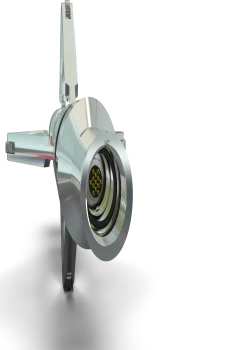
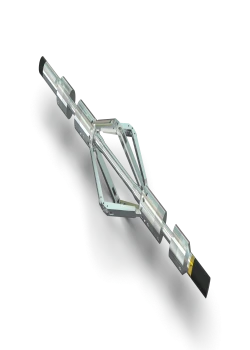
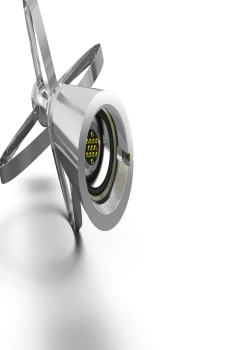
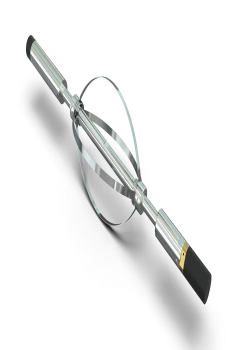
Our Centralizers: Roller Centralizer & Bow Spring Centralizer
A cased-hole logging solutions provider.
How to choose- Roller Centralizer, Bow Spring Centralizer
These are the two most common logging centralizer options, with the decision primarily depending on wellbore trajectory and core operational trade-offs:
Select Roller Centralizers-when the main contradiction of the operation is to overcome huge friction, protect cables, and the well conditions are complex. In horizontal wells and long-displacement wells, it is the first choice for reducing operational risks and ensuring the smooth arrival of tools.
Select Bow Spring Centralizer- when the main contradiction of the operation is to ensure measurement accuracy and centering the tool, and the well conditions are relatively regular (such as vertical Wells, conventional inclined Wells). It is almost a must-have for tools that require plate bonding, such as micro-resistivity scanning.
Key Points for Use & Maintenance
Pre-installation inspection- Carefully inspect the centralizer (especially bow springs, wear plates, rollers, and bearings) for cracks, deformation, or severe wear. Ensure all connecting bolts (such as bow spring seat lock nuts) are securely fastened.
Proper adjustment- For adjustable bow spring centralizers, adjust according to borehole size and tool specifications based on manufacturer-recommended parameters. Avoid over-compression that may cause plastic deformation of bow springs, or under-tightening that results in insufficient centralizing force.
Deployment monitoring- Run in slowly at a constant speed, closely monitoring the weight indicator and torque gauge. If obstruction is encountered, do not force down; work the pipe or pull out to inspect to prevent centralizer damage or sticking.
Maintenance after removal- Promptly clean off mud and cuttings. Carefully inspect wear on bow springs (especially wear plates), rollers, and bearings. Timely replace severely worn components (such as wear plates, deformed bow springs, or damaged rollers/bearings).
Establish a usage file- Record each centralizer's usage details including well runs, running depth, and pullout wear condition to facilitate life tracking and predictive maintenance.
Conclusion
The A-One Oil Roller Centralizer and Bow Spring Centralizer are two of the most commonly used and distinctive tools in the field of oil logging.
Roller centralizer is "specialist tools" that convert sliding friction into rolling friction, dramatically reducing deployment resistance. It is the key tools for ensuring operational success and efficiency in complex wellbores such as high-angle wells, horizontal wells, and long horizontal sections. Selecting designs with elastic retraction mechanisms and easily replaceable roller components maximizes their advantages.
Bow Spring Centralizer is the "reliable workhorse" featuring simple structure, strong and adjustable centralizing force, high adaptability, and reliability. It is especially suitable for conventional logging tools and vertical/low-angle wells, making them an economical and reliable choice. Selecting models with replaceable wear plates can significantly enhance their cost-effectiveness.
The final decision requires comprehensive evaluation based on specific wellbore conditions, operational objectives, budget, and tool compatibility.
Welcome to contact us to learn more about our tools via e-mail info@a-oneoil.com


